
Russian 'war hero' turned deserter: 'I shot myself and my own men to get us out of Ukraine'
A Russian officer once paraded as a war hero says disillusionment and fear of being sent back to Ukraine drove him to wound his own men — and himself — to escape the front.

Amalia Zatari, BBC News Russian.
Reporting from Astana.
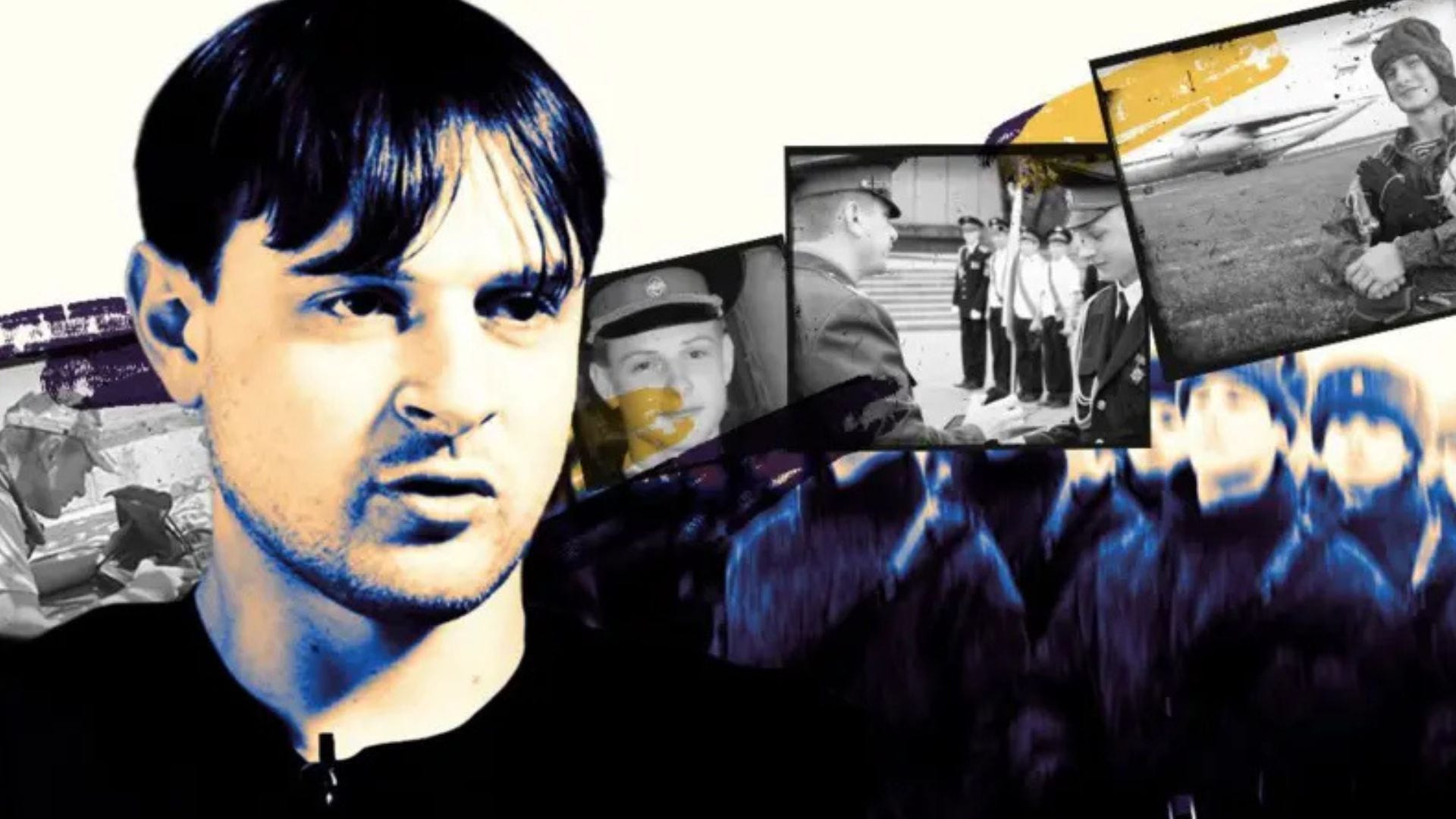
Yevgeny Korobov, a former officer of the Russian army, stands in the middle of the room dressed casually in a black shirt and light pants. The 30-year-old has been living in Astana, the capital of Kazakhstan, for almost three years.
He says that during this time seven or eight other deserters have stayed in his apartment.
“I try as best I can to help people like me. You don’t need to pay me, just live here, that’s all,” he says. “Who else will help them? After all, there is something that binds us. We are all deserters. We all ran.”
Just four years previously, Korobov was fighting in Ukraine from February to May 2022.
‘The war has begun’
Korobov had always wanted to be in the military, although his parents were postal workers. He studied at a military college in his native Krasnoyarsk, before joining the Russian army as “a young officer full of enthusiasm to serve”. His contract was to last until 2023.
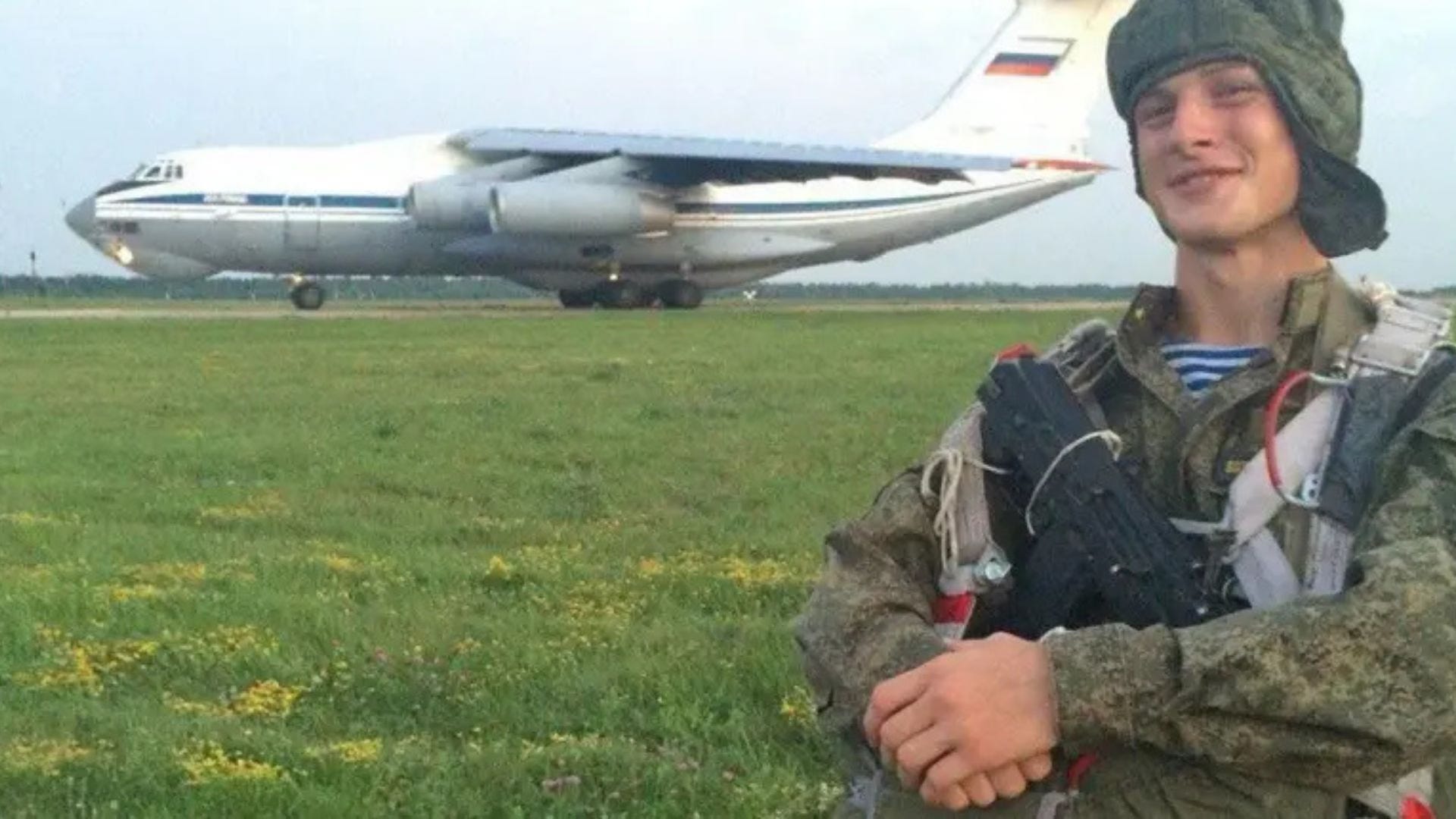
His enthusiasm soon soured, however.
“During service in the army you encounter injustice and madness, and you begin to become completely disillusioned with everything, with how things are in Russia,” he says.
In early 2022, Korobov was sent to military exercises in the Kursk region, near the Ukrainian border. “I didn’t believe there would be a war, but we went there with anxiety,” he recalls.
He describes what he saw after crossing the border into Ukraine: “We drove through populated areas. People were living their lives, Someone was refuelling a car, someone was drinking coffee, someone smoking. And we’re driving. The war has begun.”
His brigade moved towards the capital Kyiv, stopping in the Brovary district east of the city.
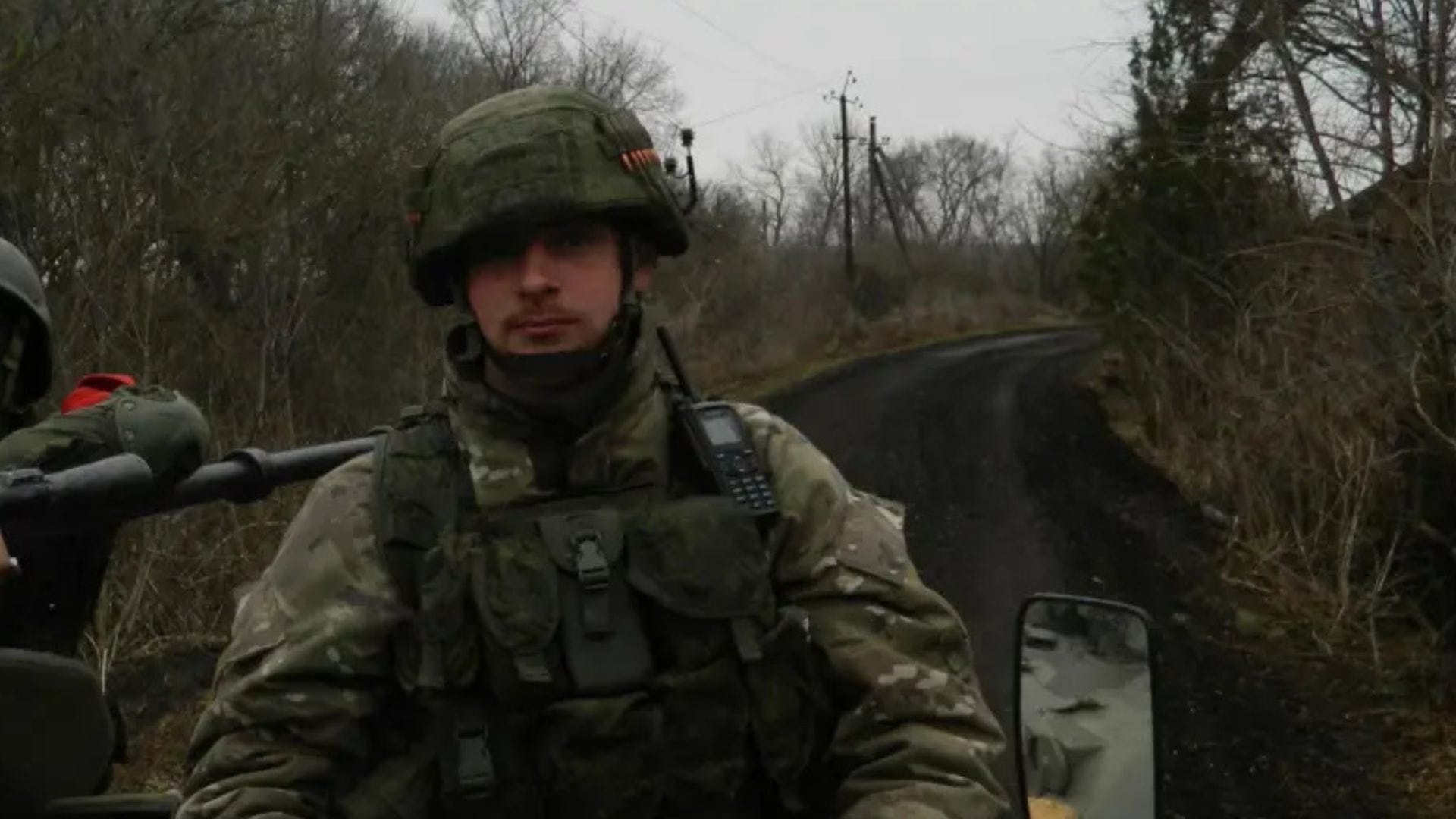
This is the area where the Ukrainian prosecutor’s office says that Russian soldiers had carried out war crimes. The outlets Meduza and Radio Liberty investigations allege that soldiers of the 15th Brigade, where Korobov was based, had set up a torture chamber in a post office in the Kyiv region. Journalists also reported on the execution of at least five civilians by the same brigade.
Korobov claims that he personally did not witness war crimes, but heard about them from others. He says that his job was to escort rear columns, navigation and route reconnaissance during the war, and that therefore he was constantly on the move.
His brigade was near Kyiv until the end of March, after which he left the region when Russian forces retreated following the failed attempt to encircle the Ukrainian capital. As he retreated, Korobov saw destroyed Ukrainian towns. He says this caused him “horror and disappointment”.
Korobov says that the columns ran into ambushes by several Ukrainian forces.
“We had to fire back,” he recalls. “What else could we do? Die? Am I a good person if I died? I also wanted to live and wanted all my soldiers to return. What were we fighting for? For our lives. The Ukrainians had an enemy — us. We had two enemies — the Ukrainians and our own commanders.”
The ‘war hero’
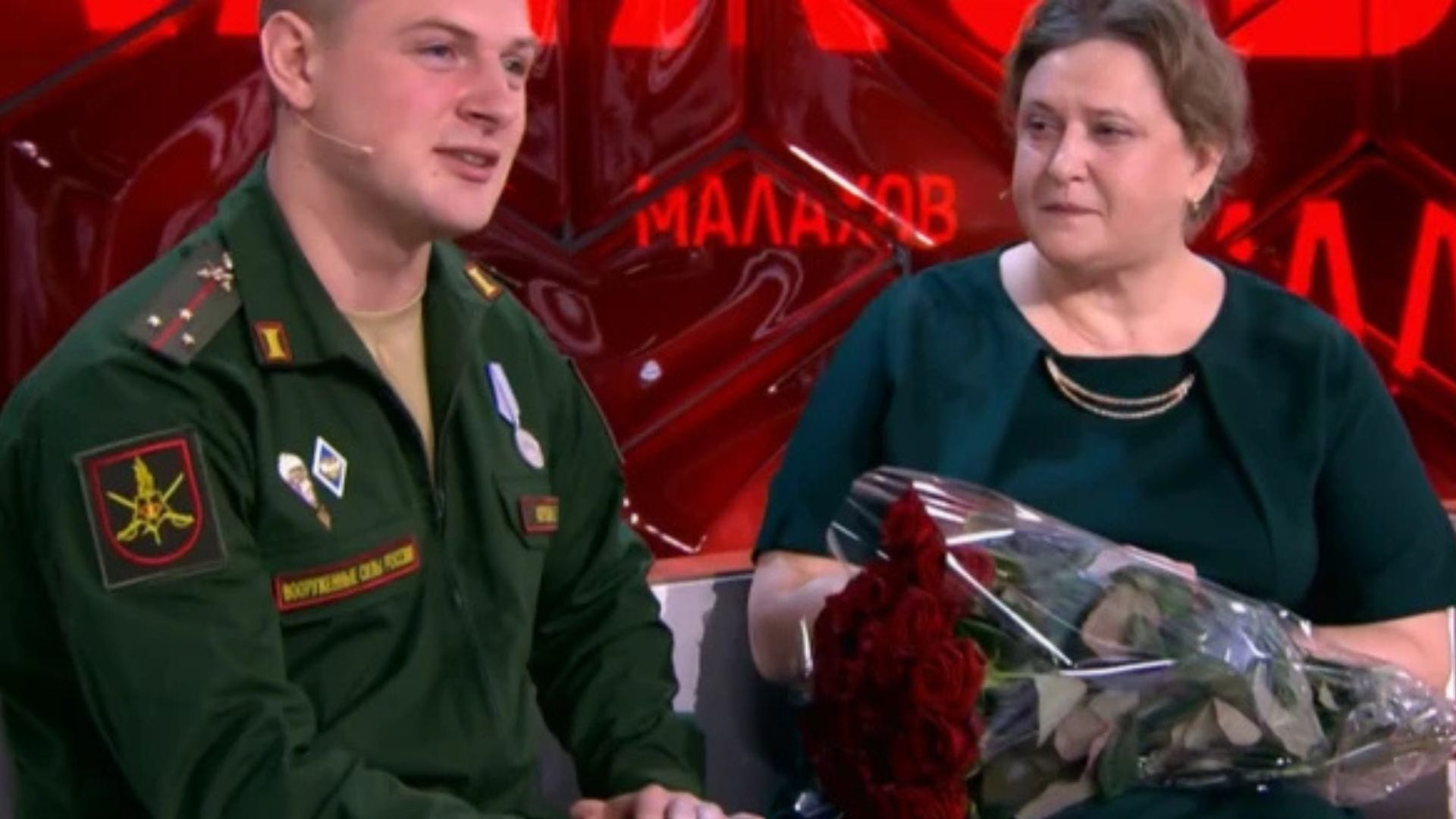
At the end of 2022, just before he finally deserted and left Russia for Kazakhstan, Korobov was ordered by his commander in Moscow to appear on Russian television.
The show painted him as a war hero who had been injured in battle.
“Senior Lieutenant Yevgeny Korobov, together with his group, was escorting a rear column,” said the host of a popular evening talk show on Channel One. “They ran into an ambush. They fought superior enemy forces. They destroyed at least 15 militants and enemy equipment. They themselves had no losses.”
Korobov calls the story, first reported by the Russian defence ministry, fabricated. He says his unit did run into an ambush at the beginning of March 2022 in the Chernihiv region, but that the extent of the ordeal was greatly exaggerated.
“Fell into an ambush — yes. ‘Carefully prepared’ — hardly. Whether the enemy’s numbers were superior, I don’t know how many people were there or who was firing,” retorts Korobov.
After appearing in the media, he received a medal for courage for which Korobov says he “couldn’t care less”. “For an invented feat? For a war I didn’t want to take part in? I already didn’t want to serve in the army at all — I was just enduring until my contract ended.”
What Korobov does not dispute is that he was injured in Ukraine. During the course of the television interview, he is noticeably limping.
‘No way back’
Korobov was wounded in the leg in Donetsk in May 2022 after which he was evacuated and returned to Russia.
At the time, the command was issued to assault the village of Ozerne, near Lyman. “Only once were we able to get close to it; we were hit with everything possible, and during all the following assaults we couldn’t even approach,” says Korobov.
“At that point I already understood that there was no chance we would be allowed to go home. And that the only way to leave there was as dead or wounded.”
One day, their unit accidentally landed a drone on Ukrainian positions. Korobov says his unit of four people was sent to retrieve it and told by his commanding officer not to return without it — a mission that he describes as impossible.
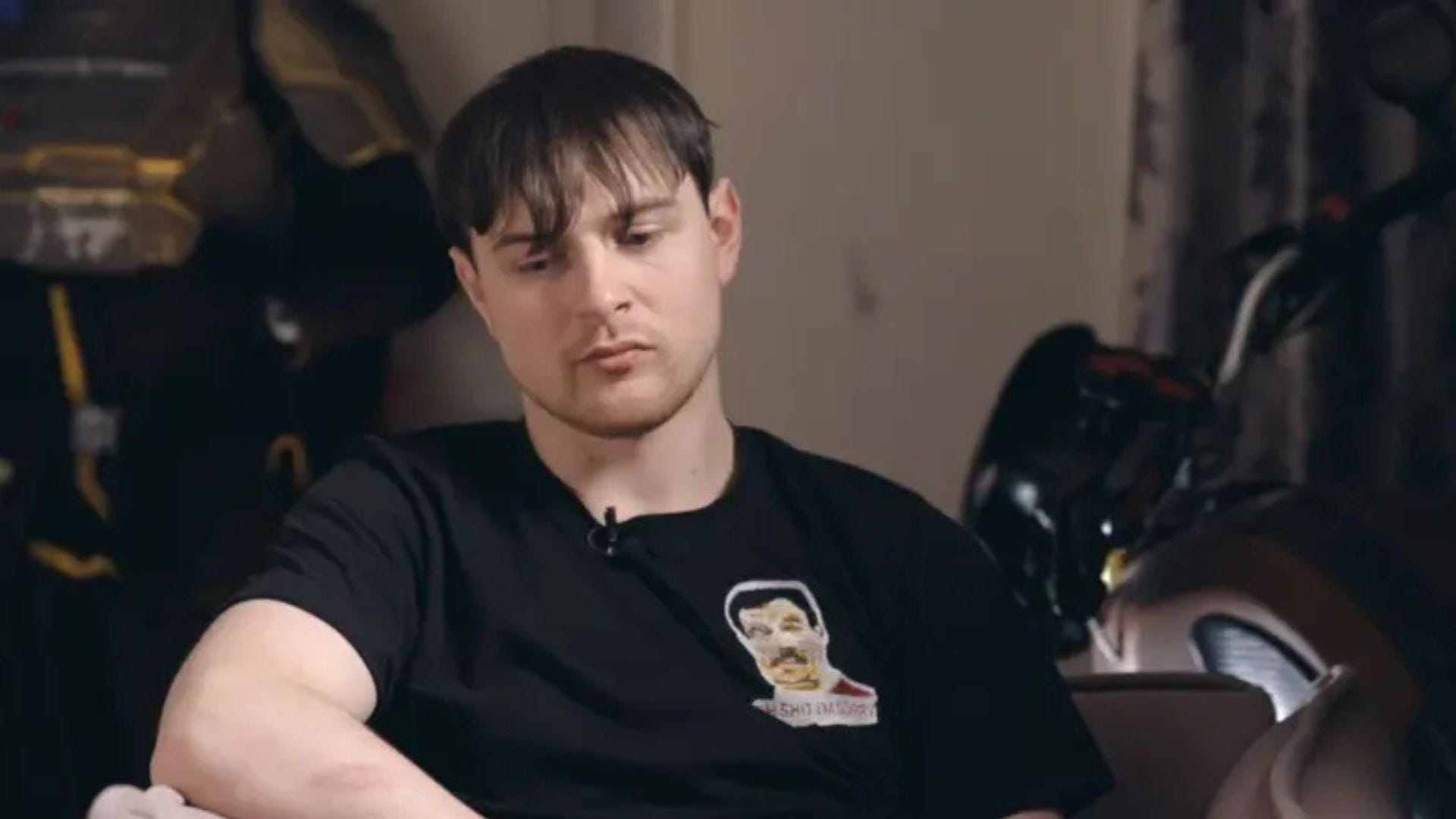
“I understood that that was it, there was no way back,” he says. “And I opened fire on my own soldiers. I fired a burst into the ground. I wounded my guys. Then I wounded myself, shot myself. I provided first aid, and we crawled towards evacuation.”
This suggests that the injury that was reported and celebrated on the television program Let Them Talk was one Korobov inflicted on himself.
The BBC cannot independently verify Korobov’s account, although he provided photographs of his wounded leg.
Korobov and the remnants of his platoon were then evacuated from the frontline. He spent a month and a half in a hospital, then underwent rehabilitation.
Korobov wanted to serve out his contract in Russia until 2023, without returning to Ukraine. However, after the announcement of further mobilisation in September 2022, all contracts became indefinite. At the end of that year, he was informed that he would be sent back to Ukraine.
Looking for asylum
Korobov says that before leaving Russia he contacted the Go By The Forest project, which helps former Russian soldiers like himself who fear returning to the war in Ukraine. Activists then drew up a route for him to escape to Kazakhstan.
Soon he had packed a bag and left Russia.
A criminal case for desertion has since been opened against Korobov, and he faces up to 15 years in prison. Because of this, for the first months of life in Astana he hardly left the house.
Later, he found a job at a bar — illegally, because, as an asylum-seeker, he wasn’t permitted to work there.
“Kazakhstan has not granted asylum to a single Russian citizen yet, and I think it won’t,” says Korobov.
“We are waiting for a decision from European countries, especially from France, because at the moment it is the only country that has accepted Russian deserters,” he says.
Korobov understands the reluctance of Western countries to accept Russian deserters, but believes that this is one of the “effective ways of resolving the conflict: not only supplying weapons and imposing sanctions, but also giving Russians the opportunity to refuse to carry weapons, to refuse to fight.”
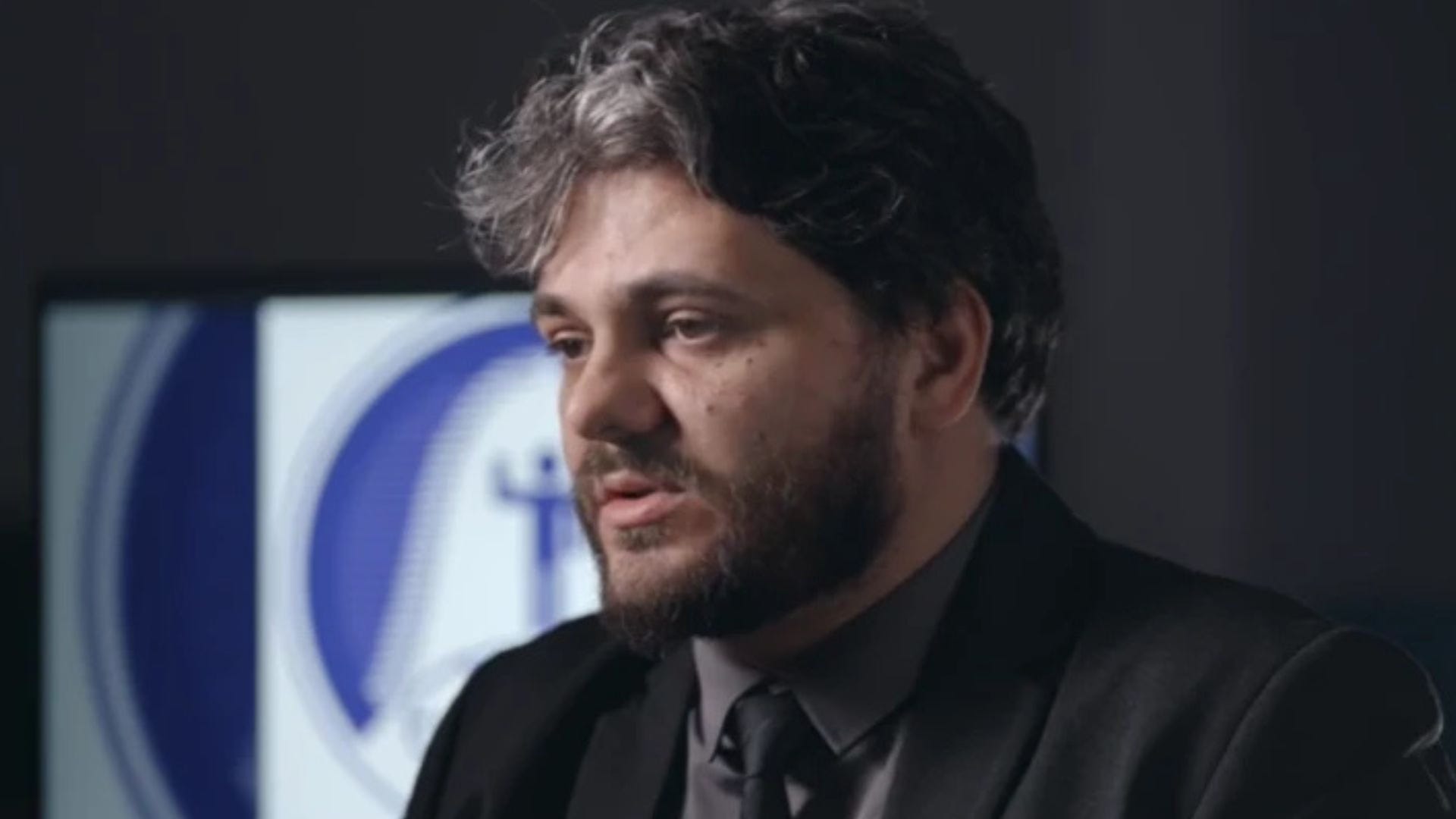
The BBC spoke to Artur Alkhastov, a lawyer from the Kazakhstan Bureau for Human Rights, who has been helping Russian deserters who fled to the country during the past three years. Part of the process is to verify the former soldiers, in order to prevent agents of the Russian security services from infiltrating the group.
He says verifying Korobov’s story was difficult and took time.
In his view, a Russian deserter today is in even greater danger than many other opponents of the war or political dissidents, because the Russian authorities see these former soldiers as traitors.
This puts Russian deserters in Kazakhstan and Armenia in a vulnerable position, because both countries host Russian military bases.
Korobov and other deserters can currently be protected from extradition to Russia because they hold the status of asylum seekers, but this does not protect them from the threat of abduction, Alkhastov explains.
Read this story in Russian here.
Incredible reporting on the moral complexities here. The "two enemies" framing really hits hard—caught between Ukrainian forces and his own commanders ordering impossible missions. Teh ambush retrieval story is particularly chilling, having to wound his own unit to save them. Reminds me of stories from Vietnam where similar desperation led soldiers to extreme measures ngl.
There’s an apparent discrepancy between “Korobov and other deserters can currently be protected from extradition to Russia because they hold the status of asylum seekers, but this does not protect them from the threat of abduction, Alkhastov explains” and Korobov’s quote a few paragraphs before: “Kazakhstan has not granted asylum to a single Russian citizen yet, and I think it won’t”.